Remote Work Security Challenges for Denver Companies: Protecting Distributed Teams
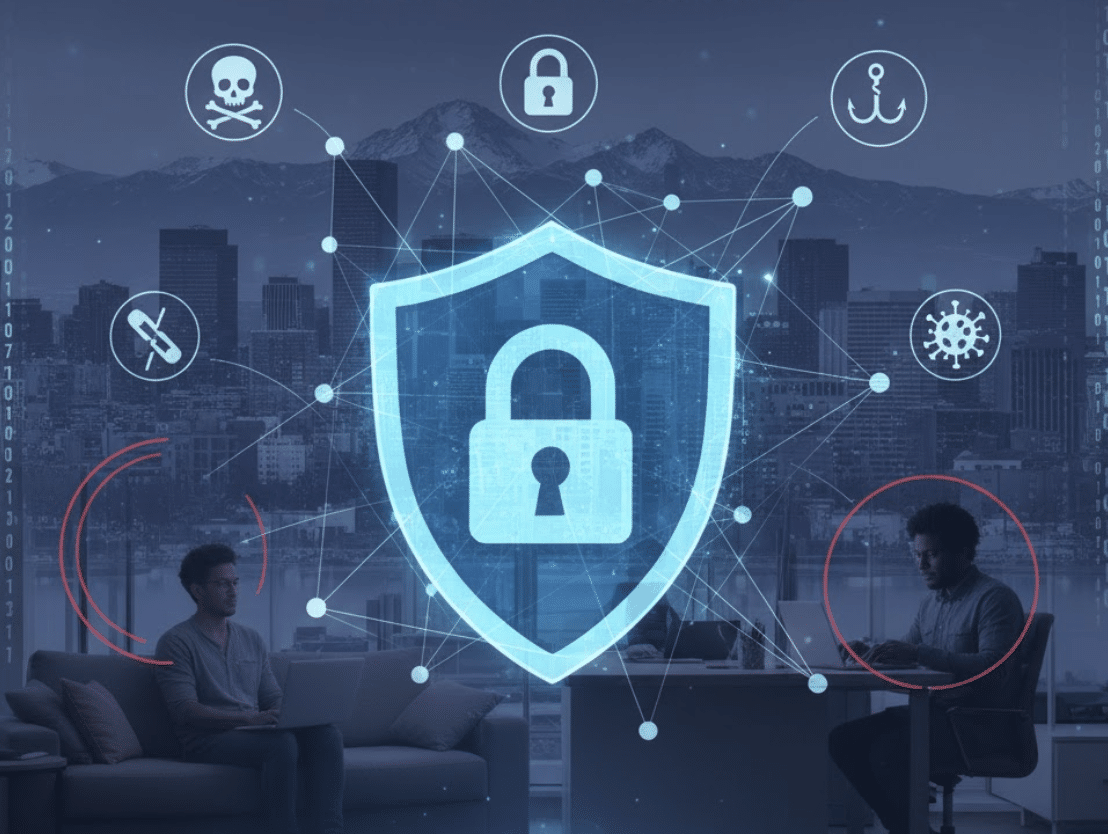
Denver has become a hub for companies embracing remote-first and hybrid work models, from technology startups in RiNo to financial services firms in the Denver Tech Center. While remote work offers advantages in talent acquisition and operational flexibility, it creates cybersecurity challenges that traditional office-based security models cannot address.
Companies with distributed teams face expanded attack surfaces, complex compliance requirements, and the challenge of maintaining security controls across diverse locations and networks. Understanding these challenges is the first step toward building effective cybersecurity programs for remote and hybrid workforces.
The Remote Work Security Landscape in Denver
Expanded Attack Surface Challenges
Remote work fundamentally changes an organization’s cybersecurity risk profile. Instead of securing a controlled office environment with managed networks and devices, companies must protect employees working from home offices, coffee shops, co-working spaces, and travel locations.
Network Security Complexities: Remote employees connect to business systems through residential internet, public Wi-Fi, and mobile networks that lack enterprise security controls. Each connection point represents a potential entry route for cyberattackers seeking to access corporate data and systems.
Device Management Difficulties: Companies struggle to maintain security standards across employee-owned devices, home office setups, and company equipment shipped to remote locations. Traditional device management approaches assume physical access and controlled environments that don’t exist in remote work scenarios.
Endpoint Visibility Gaps: IT teams lose visibility into remote devices and networks, making it difficult to detect security incidents, perform updates, or respond to threats. This visibility gap creates blind spots that sophisticated attackers can exploit.
Identity and Access Management Challenges
Remote work puts enormous pressure on identity and access management systems that were designed for office-based operations.
Authentication Complexities: Employees access business systems from multiple devices and locations, making it difficult to distinguish legitimate access from potential security threats. Traditional location-based security controls become meaningless when employees work from anywhere.
Privilege Management Issues: Remote employees often require broader system access to perform their jobs independently, but increased privileges create additional security risks. Balancing productivity needs with security requirements becomes more complex in distributed environments.
Session Management Problems: Managing active sessions across multiple devices and time zones creates security gaps. Employees may leave systems logged in on home computers or mobile devices, creating opportunities for unauthorized access.
Cloud Security Challenges for Distributed Teams
Shadow IT and Unmanaged Applications
Remote employees frequently adopt cloud applications and services without IT approval, creating shadow IT environments that lack proper security controls.
Unvetted Application Risks: Employees use personal cloud storage, collaboration tools, and productivity applications that may not meet corporate security standards. These unvetted applications can expose sensitive business data to unauthorized access or breach.
Data Loss Prevention Gaps: Traditional data loss prevention tools struggle to monitor and control information sharing across diverse cloud applications and remote devices. Companies lose visibility into how sensitive data moves through their distributed workforce.
Integration Security Issues: Cloud applications used by remote teams often integrate with business systems through APIs and data connections that create new attack vectors. Poor integration security can provide attackers with pathways to critical business systems.
Collaboration Platform Security
Remote teams rely heavily on video conferencing, messaging, and file sharing platforms that become high-value targets for cyberattacks.
Communication Interception Risks: Video calls, instant messages, and shared documents contain sensitive business information that attackers seek to intercept. Inadequate encryption or security controls on collaboration platforms can expose confidential communications.
File Sharing Vulnerabilities: Remote teams share documents through various cloud platforms, creating challenges in maintaining version control, access permissions, and data protection. Misconfigured sharing settings can expose sensitive information to unauthorized users.
Compliance and Regulatory Challenges
Multi-Jurisdictional Compliance
Companies with distributed teams often have employees working from multiple states or countries, each with different privacy laws and cybersecurity regulations.
Data Protection Variations: State privacy laws like California’s CCPA, Virginia’s CDPA, and European GDPR create complex compliance requirements when employees access customer data from different jurisdictions. Companies must navigate varying requirements for data protection, breach notification, and individual privacy rights.
Industry Regulation Complexity: Healthcare companies must maintain HIPAA compliance across remote healthcare workers, financial services firms must meet SEC and FINRA requirements for remote employees, and other regulated industries face similar challenges in extending compliance controls to distributed workforces.
Audit and Documentation Challenges: Compliance audits become more complex when business operations span multiple locations and jurisdictions. Companies must demonstrate security controls and compliance measures across diverse remote work environments.
Cross-Border Data Transfer Issues
Companies with international remote employees face additional compliance challenges related to cross-border data transfers and varying national cybersecurity requirements.
Data Sovereignty Requirements: Some countries require that citizen data remain within national borders, creating challenges for companies with global remote teams that access centralized business systems.
Varying Cybersecurity Standards: Different countries have different cybersecurity requirements and standards, making it difficult to implement consistent security controls across international remote teams.
Incident Response Challenges for Remote Teams
Response Coordination Difficulties
Cybersecurity incidents involving remote employees create unique response challenges that traditional incident response plans don’t address.
Device Isolation Problems: Isolating compromised remote devices requires different procedures than office-based incident response. IT teams may lack physical access to affected devices and must coordinate response activities through remote employees who may lack technical expertise.
Evidence Collection Constraints: Collecting digital evidence from remote devices and networks requires specialized procedures and tools. Traditional forensics approaches that assume physical device access don’t work for distributed environments.
Communication Coordination: Coordinating incident response across distributed teams requires secure communication channels and procedures that work regardless of employee location or time zone.
Business Continuity Considerations
Remote work incidents can affect business continuity differently than office-based incidents, requiring updated planning and response procedures.
Distributed Impact Assessment: Understanding the business impact of security incidents becomes more complex when operations are distributed across multiple locations and systems.
Recovery Planning: Business continuity plans must account for scenarios where remote employees cannot access business systems or where home office environments are compromised.
Technology Implementation Challenges
Security Tool Integration
Implementing cybersecurity tools for remote teams requires different approaches than traditional office-based deployments.
Agent Deployment Difficulties: Installing and maintaining security agents on remote devices requires procedures that work without physical access or on-site technical support.
Performance Impact Concerns: Security tools must work effectively on diverse home networks and internet connections without creating performance problems that affect employee productivity.
Centralized Management Needs: IT teams need centralized visibility and management capabilities for security tools deployed across distributed remote environments.
Cost and Scaling Considerations
Securing remote teams often requires different cost models and scaling approaches than traditional office-based security.
Per-User Licensing Challenges: Many security tools use per-user licensing models that can become expensive for companies with large remote teams or seasonal workforce fluctuations.
Infrastructure Investment Requirements: Supporting remote teams may require additional cloud infrastructure, VPN capacity, and security services that create ongoing operational costs.
Building Effective Remote Work Security Programs
Strategic Planning Requirements
Companies need strategic cybersecurity leadership to navigate the complex challenges of securing distributed teams while maintaining operational efficiency and business growth.
Risk Assessment and Planning: Effective remote work security requires comprehensive risk assessments that account for distributed operations, cloud-first infrastructure, and multi-jurisdictional compliance requirements.
Technology Architecture Design: Remote work security architecture must be designed specifically for distributed operations rather than adapting traditional office-based approaches.
Policy and Procedure Development: Companies need remote work security policies and procedures that address the unique challenges of distributed teams while supporting business productivity.
Executive Leadership and Oversight
Remote work security challenges require executive-level cybersecurity leadership that understands both the technical and business aspects of distributed operations.
Many companies find that virtual CISO services provide the strategic cybersecurity expertise needed to address remote work security challenges without the cost and complexity of full-time executive hiring.
Strategic Guidance Benefits: Executive-level cybersecurity leadership helps companies navigate complex remote work security decisions, compliance requirements, and technology investments.
Cost-Effective Expertise: Virtual CISO services provide access to specialized remote work security expertise at a fraction of the cost of full-time cybersecurity executives.
Technology Solutions for Remote Work Security
Zero-Trust Security Models
Remote work environments require security models that don’t assume trust based on network location or device ownership.
Identity-Centric Security: Zero-trust approaches focus on verifying user identity and device compliance before granting access to business systems, regardless of location or network.
Continuous Verification: Rather than one-time authentication, zero-trust models continuously verify user behavior, device health, and access patterns to detect potential security threats.
Cloud-Native Security Tools
Remote teams benefit from security solutions designed specifically for cloud-first operations rather than traditional tools adapted for remote use.
Scalable Cloud Security: Cloud-native security tools can scale automatically with remote team growth and provide consistent protection across diverse locations and devices.
Integration Capabilities: Modern security platforms integrate with business applications and cloud services through APIs, providing centralized security management for distributed operations.
Getting Help with Remote Work Security Challenges
Remote work security challenges require specialized expertise that many companies lack internally. The complexity of securing distributed teams, managing multi-jurisdictional compliance, and implementing cloud-first security architectures often exceeds the capabilities of traditional IT departments.
Professional Assessment and Planning: Companies benefit from professional cybersecurity assessments that identify specific remote work security risks and provide actionable recommendations for improvement.
Free cybersecurity assessments can help Denver companies understand their current remote work security posture and identify priority areas for improvement.
Strategic Cybersecurity Leadership: Many companies discover that remote work security challenges require executive-level cybersecurity expertise to navigate effectively. Virtual CISO services provide access to this expertise without the cost and complexity of full-time hiring.
Ongoing Security Management: Remote work security requires continuous monitoring, management, and improvement. Managed security services can provide 24/7 security operations support for companies with distributed teams.
Take Action on Remote Work Security
Remote work security challenges won’t resolve themselves, and the risks continue to evolve as distributed work models become permanent features of business operations. Companies that proactively address these challenges will gain competitive advantages in talent acquisition, customer trust, and operational efficiency.
The first step is understanding your current remote work security posture and identifying specific areas that need improvement. Professional cybersecurity assessment and strategic planning can help you develop effective approaches to protecting your distributed team.
Ready to address your remote work security challenges?
Contact BlueRadius Cyber at (800) 930-0989 or to discuss your remote work security needs and explore solutions designed for distributed teams.
Essential Resources:
- Cybersecurity risk assessment to evaluate your remote work security risks
- Virtual CISO services overview for strategic cybersecurity leadership
- Cybersecurity consulting guide for selecting security partners
Related Security Resources:
Related from the BlueRadius Library
Sourced posts on adjacent topics, ranked by tag overlap.
Fundamentals
Cybersecurity Starter Kit for Small Businesses: Fast, Affordable Protection Across the U.S.
Fast, affordable cybersecurity protections every U.S. small business needs to defend against ransomware and common attacks.
ReadFundamentals
Cybersecurity Starter Kit Waco TX: Affordable Protection for Small Businesses
Affordable cybersecurity essentials for small businesses in Waco, Texas, to defend against ransomware, phishing, and data theft.
ReadFundamentals
Cybersecurity for Startups: Scalable Protection That Grows With You
How startups build security from seed through Series C without slowing engineering. Stage-by-stage investments tied to funding and sales milestones.
ReadRelated services